 (587) 703-6048
Concrete Pumping Services Calgary Builders Need

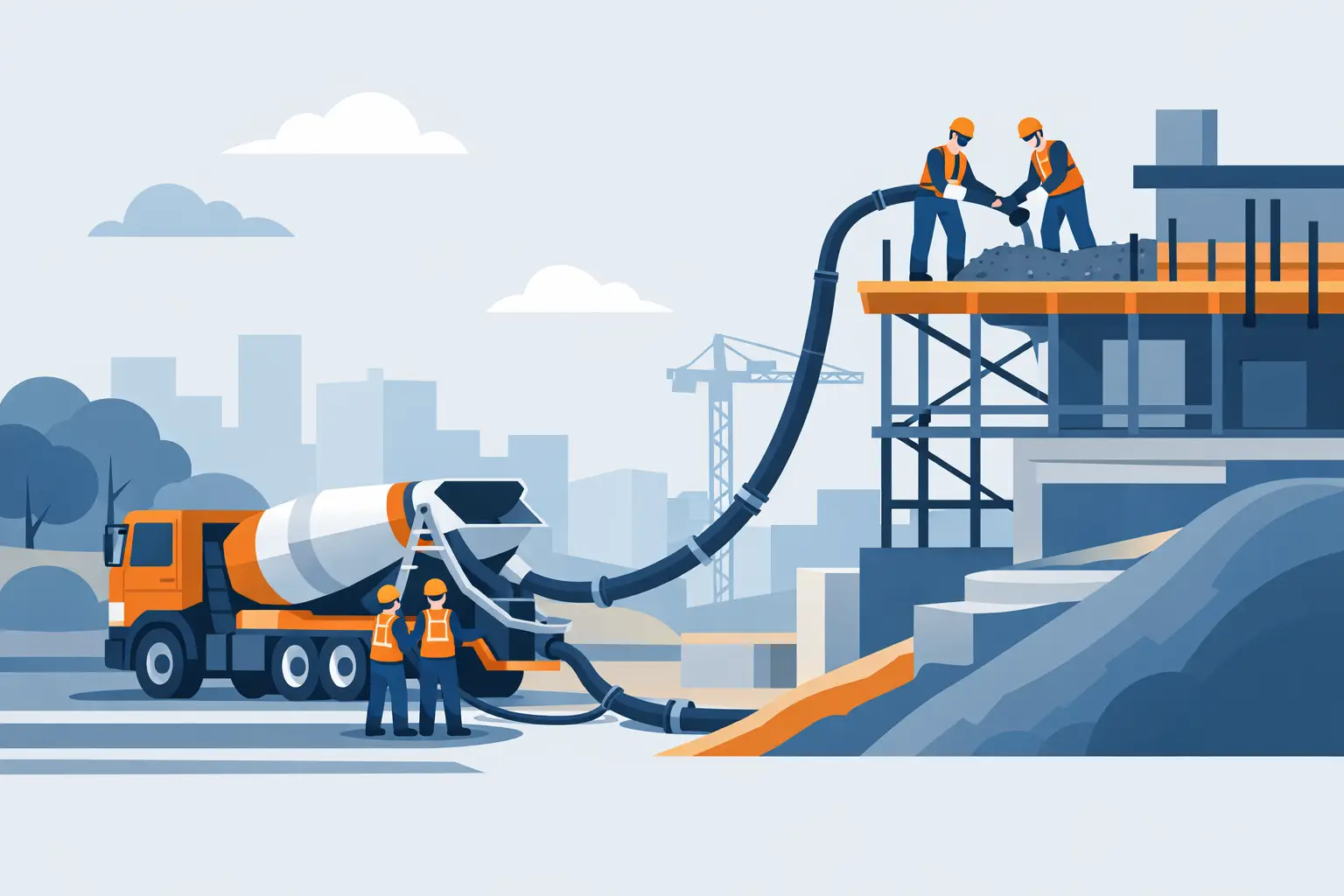
A concrete truck on site does not guarantee a productive pour. When the chute cannot reach the forms, the crew starts moving concrete by wheelbarrow, waiting on equipment, or trying to stretch the pour around access problems. That is where concrete pumping services Calgary contractors depend on make a real difference. The right pump gets concrete from the truck to the exact placement point quickly, cleanly, and with less labour tied up in the process.
For foundations, suspended slabs, garages, shops, commercial pads, retaining walls, and industrial work, pumping is often the practical answer to a jobsite problem. It is not just about reach. It is about keeping the pour moving at the pace the concrete, crew, and finishing plan require.
Why Pumping Matters on Calgary Jobsites
Concrete placement is time-sensitive. Once the trucks are rolling, poor access or an undersized placement plan can turn a straightforward pour into a costly delay. A pump gives the placing crew more control over where concrete lands, reducing the distance workers need to move material by hand.
That control matters on tight urban lots, active commercial sites, acreage builds, and projects where forms sit behind existing structures. Instead of forcing a ready-mix truck into a difficult position or relying on a long chain of wheelbarrows, a boom or line pump can place concrete over, around, or through obstacles.
The result is usually a faster pour with fewer people needed to move material. That does not mean every job needs the biggest boom available. The right setup depends on the volume, mix design, access, discharge location, and how the concrete crew plans to place and finish the work.
Better placement supports better finished work
Pumping does not replace a skilled concrete crew. It gives that crew a better way to manage placement. With concrete delivered closer to the forms, finishers can focus on consolidating, screeding, and maintaining the required elevation instead of fighting to keep up with material being moved across the site.
Accurate placement can also reduce overpour, spilled material, and unnecessary cleanup. On a busy site, keeping concrete out of landscaping, trenches, neighbouring properties, and finished areas saves more than time. It avoids preventable rework.
Choosing the Right Concrete Pumping Services in Calgary
The best pump for the job is the one that matches the site, not simply the one with the longest boom. Before booking, a contractor should consider where the ready-mix trucks can stage, where the pump can safely set up, how far the concrete must travel, and whether overhead or ground-level obstructions affect access.
A clear site plan helps the pumping crew arrive prepared. Photos, measurements, form locations, truck access details, and notes about power lines, soft ground, gates, nearby structures, or restricted working hours are all useful. A short conversation before pour day can prevent a long list of problems once concrete is on the road.
Boom pumps for reach and coverage
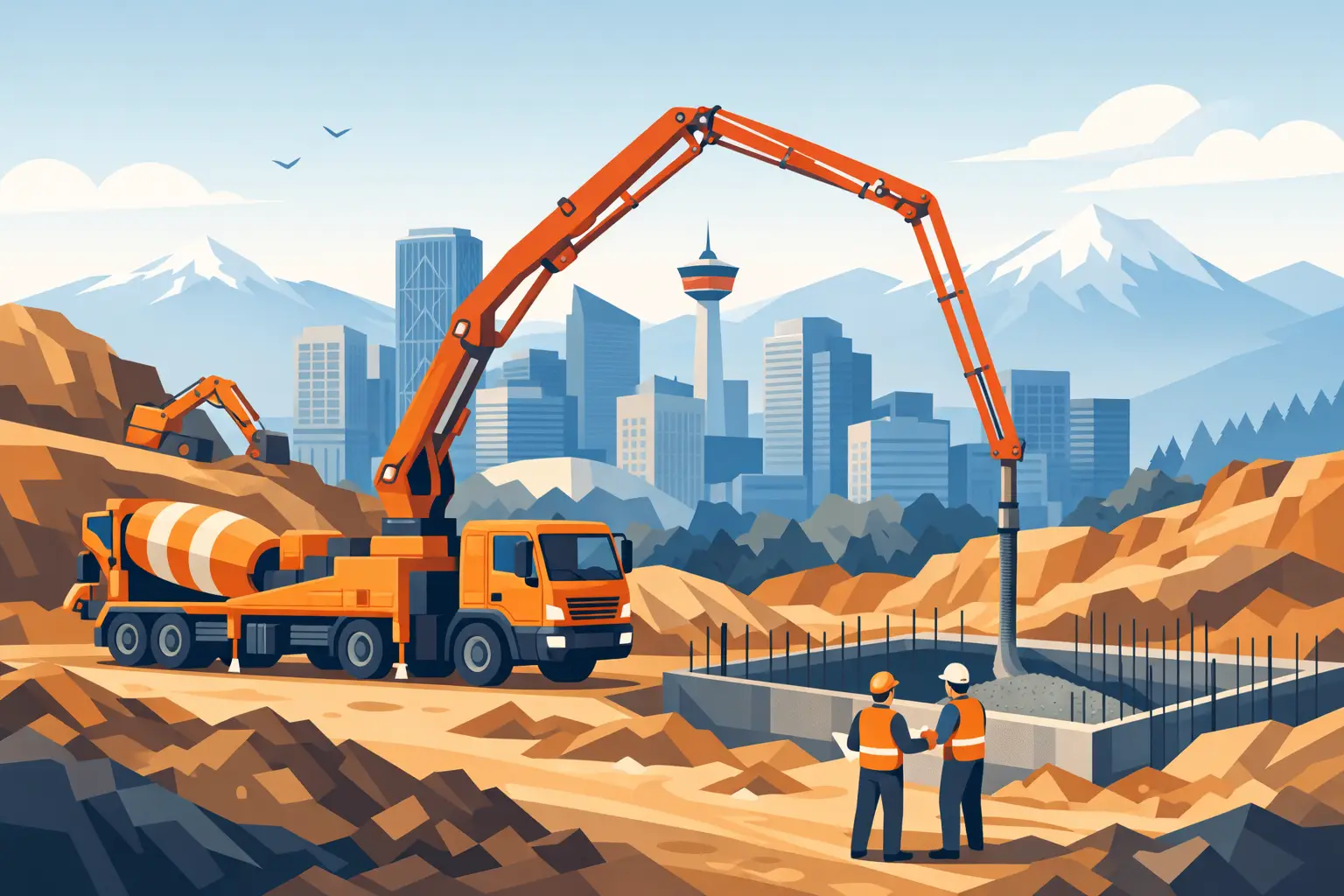
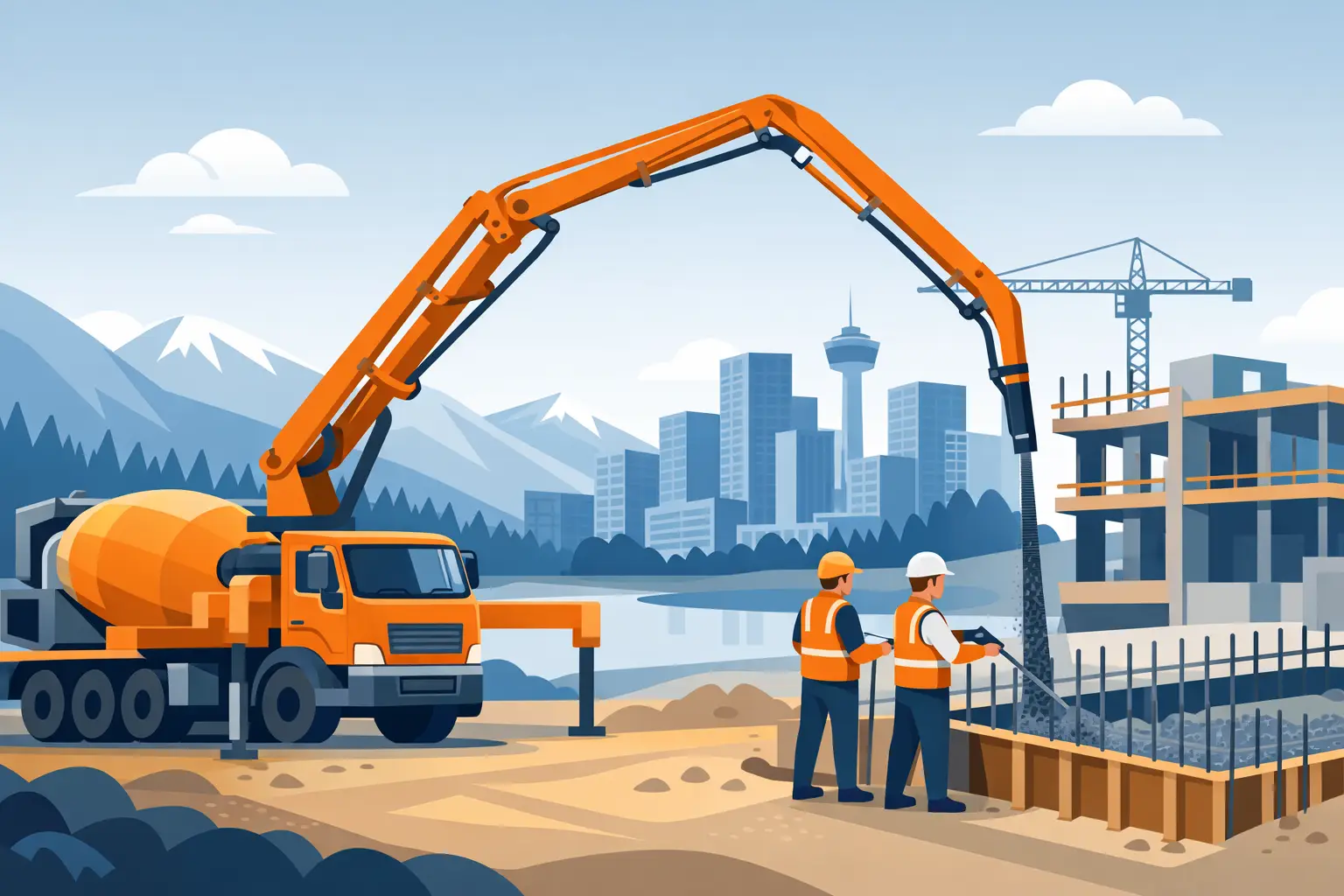
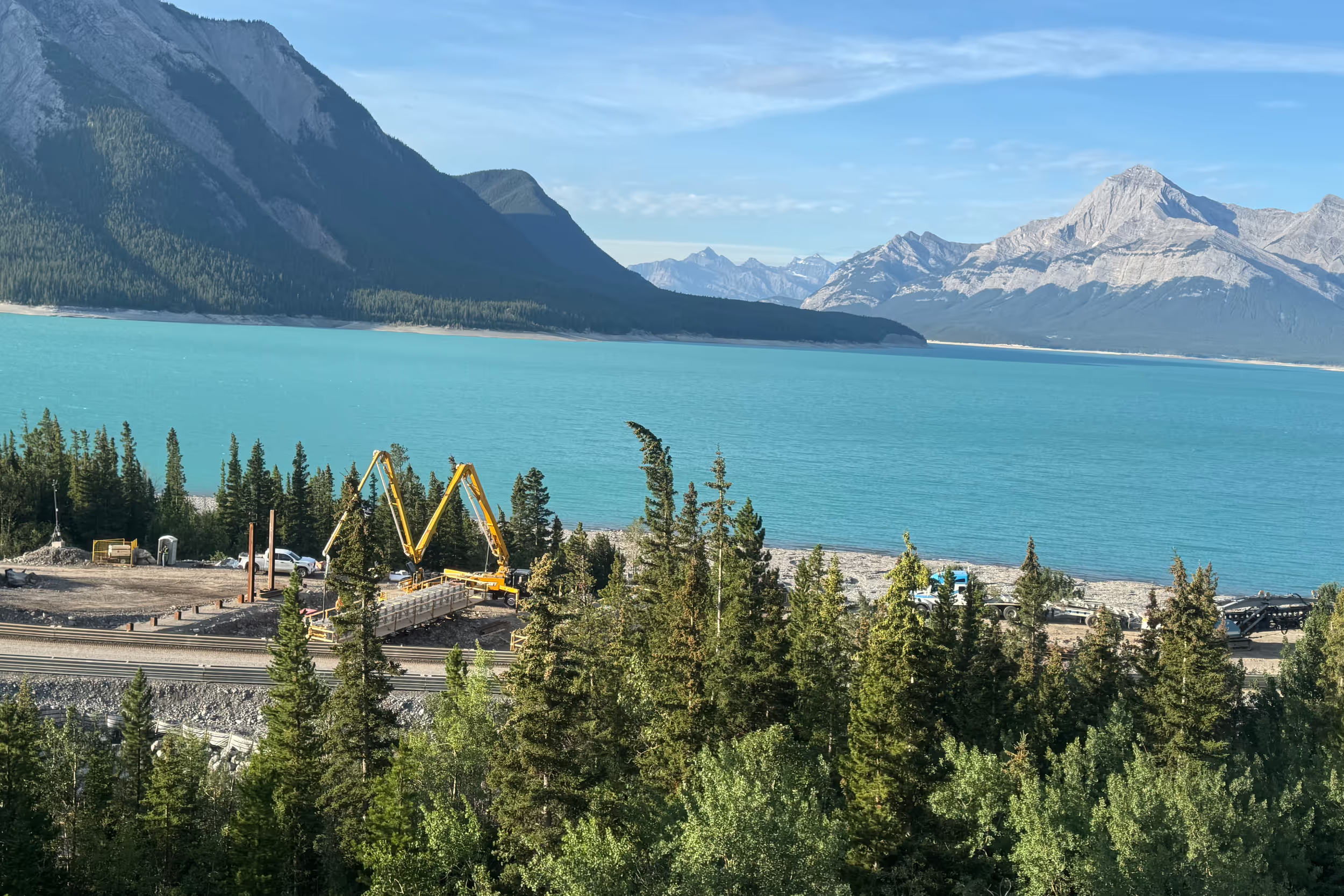
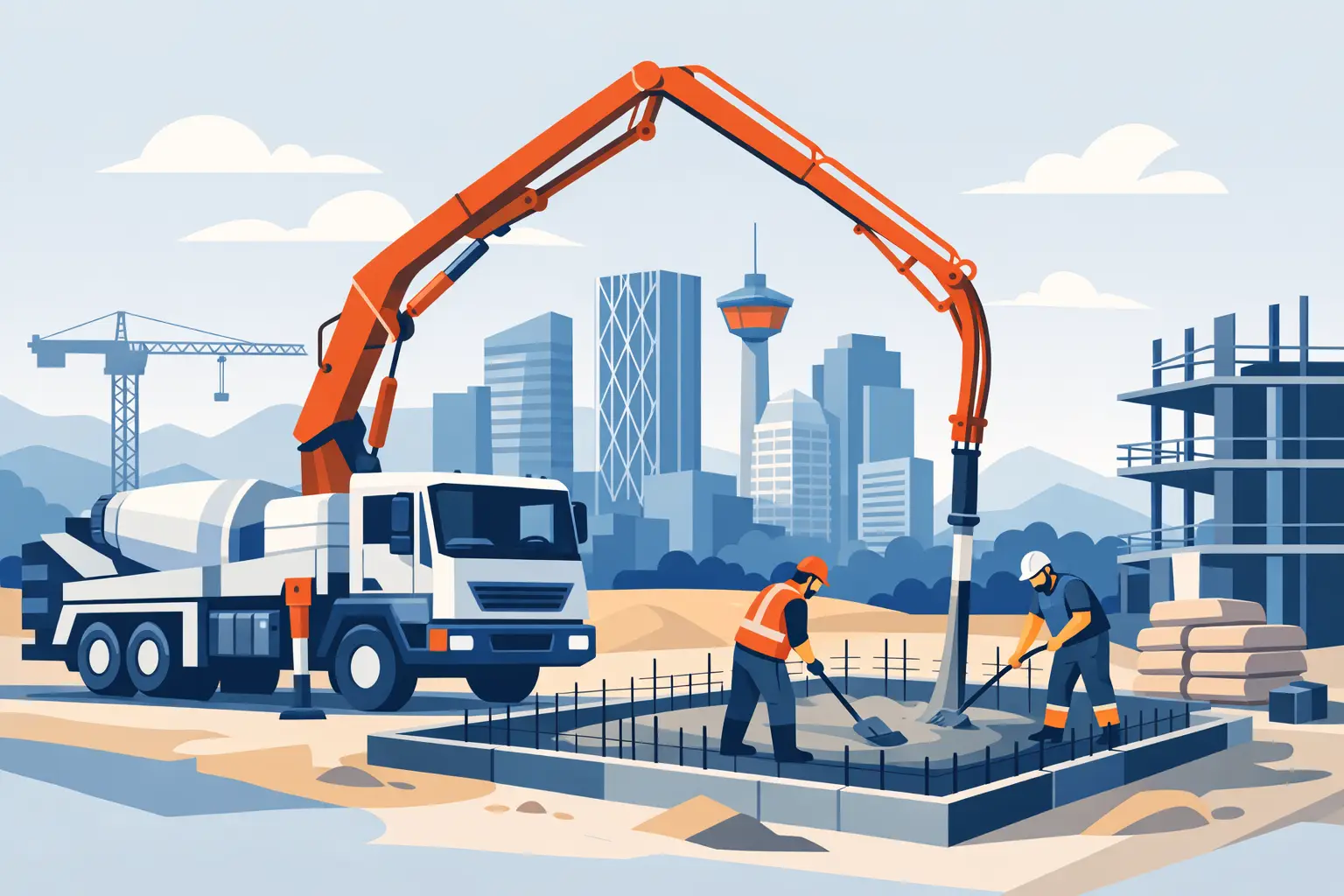
Boom pumps are built for jobs where concrete needs to travel across a wide area or over an obstacle. They are a strong fit for large foundations, elevated decks, commercial slabs, multi-unit projects, and sites where the truck cannot get close to the pour.
A high-reach boom can cover a broad working area from one setup position, which helps keep the pour moving without repeatedly relocating equipment. That is valuable on larger placements, but setup space and outrigger clearance need to be considered. A large pump is only useful when the site has a safe, stable place to deploy it.
Compact roll-and-fold boom equipment can be a better choice where access is restricted. Tight residential lots, narrow approaches, and built-up areas often call for equipment that can work around space limitations without giving up the reach needed to place concrete efficiently.
Line pumps for difficult-to-reach pours
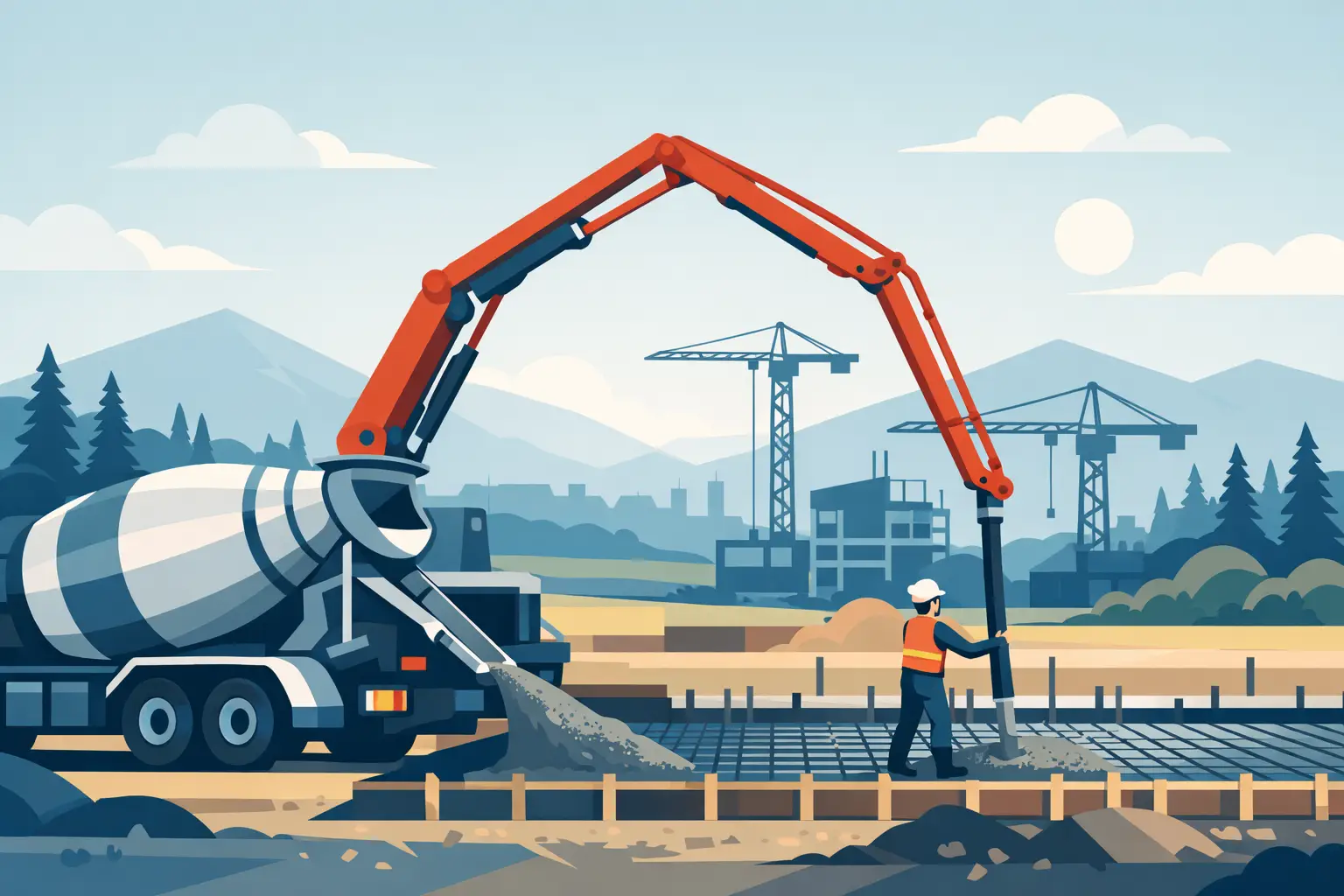
A truck-mounted line pump is often the right tool when placement needs to follow a route rather than reach from above. It can be used for garages, backyards, walkouts, additions, smaller slabs, footings, and other pours where the discharge point sits behind a house, through a narrow access area, or away from the street.
Line pumping requires planning for hose routing and crew coordination. Hoses need to be placed so they do not create a trip hazard or interfere with formwork and finishing operations. The mix also needs to be suitable for pumping. This is why pump operators, concrete suppliers, and placing crews need to be on the same page before the first truck arrives.
What a Well-Planned Pump Pour Looks Like
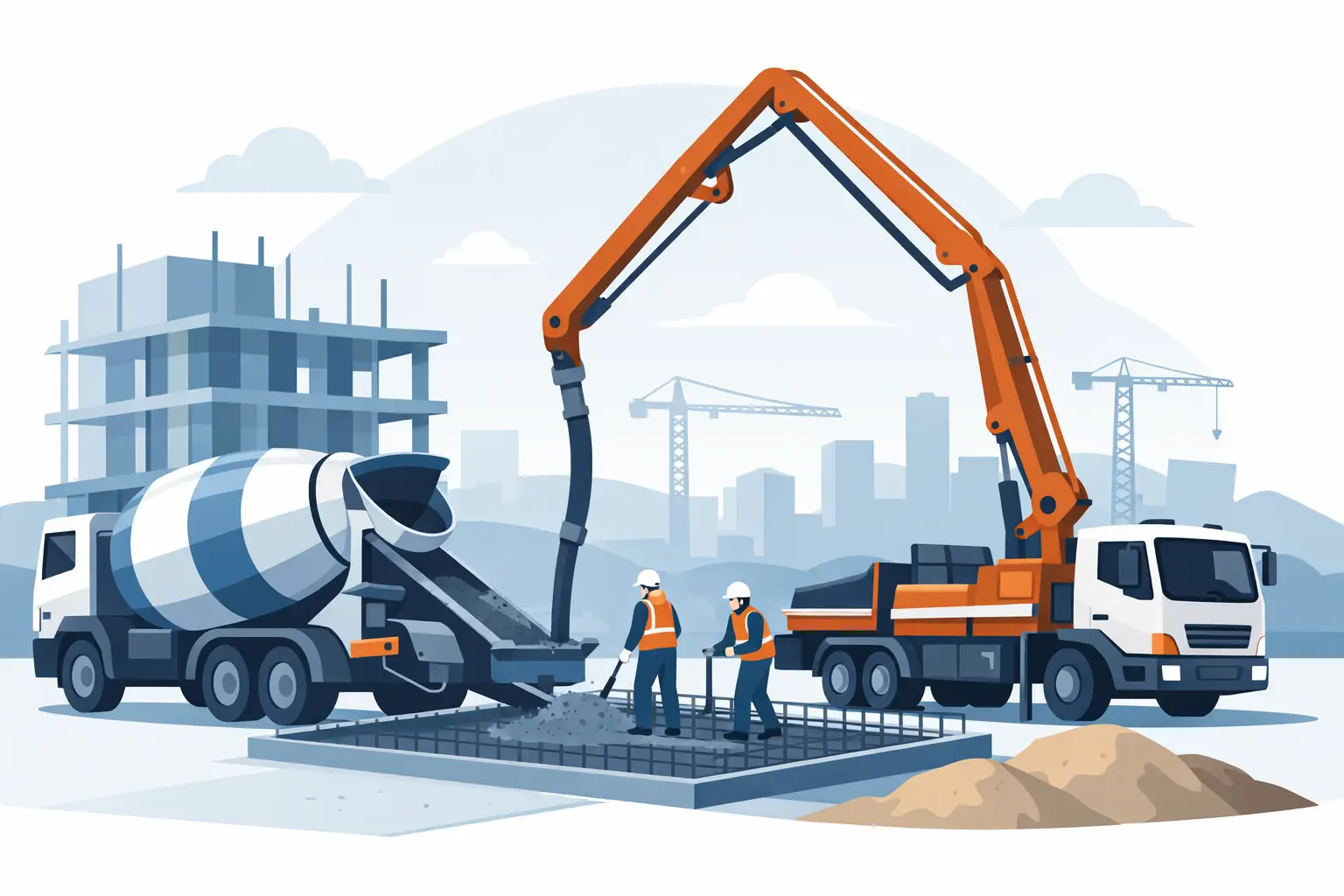
A good pumping job starts before the pump reaches the site. The pump needs a firm setup area, clear access, and enough room to operate safely. Ready-mix trucks need a route that does not block the pump or trap vehicles once the pour begins.
The formwork should be ready, braced, and checked. Reinforcing steel, inserts, blockouts, vapour barrier, and grade preparation need to be complete. Concrete does not wait while a crew searches for a missing tool or fixes a loose form board.
On pour day, the operator and concrete crew should confirm the placement sequence. For a foundation, that may mean starting in the deepest or most difficult sections and working steadily around the forms. For a slab, it may mean placing in controlled strips so the finishing crew can maintain grade without being buried in excess material.
Communication is a major part of safe, efficient pumping. The operator needs clear direction from the placing crew, while the crew needs to respect the hose, boom movement, and exclusion areas around the equipment. A capable operator does more than run the controls. They help manage the flow of concrete so the job stays organized.
The Cost Question: Pumping Versus Manual Placement
Hiring a pump adds a direct cost to the pour, so it is reasonable to ask whether it is necessary. On a small, open site with easy truck access, chute placement may be enough. If the truck can back directly to the forms and the crew can place concrete without delays, a pump may not provide enough value to justify the additional cost.
But that calculation changes quickly when access is poor or the pour is large. Manual movement requires more labour, slows placement, increases fatigue, and can create a bottleneck when trucks are arriving. The apparent savings can disappear if the crew spends hours moving material, the concrete starts to stiffen before placement, or cleanup becomes extensive.
Pumping is often the more cost-controlled option when it reduces the number of labour hours needed, shortens the pour window, and allows the finishing crew to work more effectively. The key is looking at the entire placement operation, not only the pump invoice.
What to Expect From a Dependable Pumping Partner
Reliable equipment matters, but dependable service is what keeps a pour on track. Contractors need a pumping company that confirms the details, arrives ready for the conditions, and brings equipment suited to the work. They also need operators who understand that a residential foundation, a commercial pad, and an industrial placement each demand a different approach.
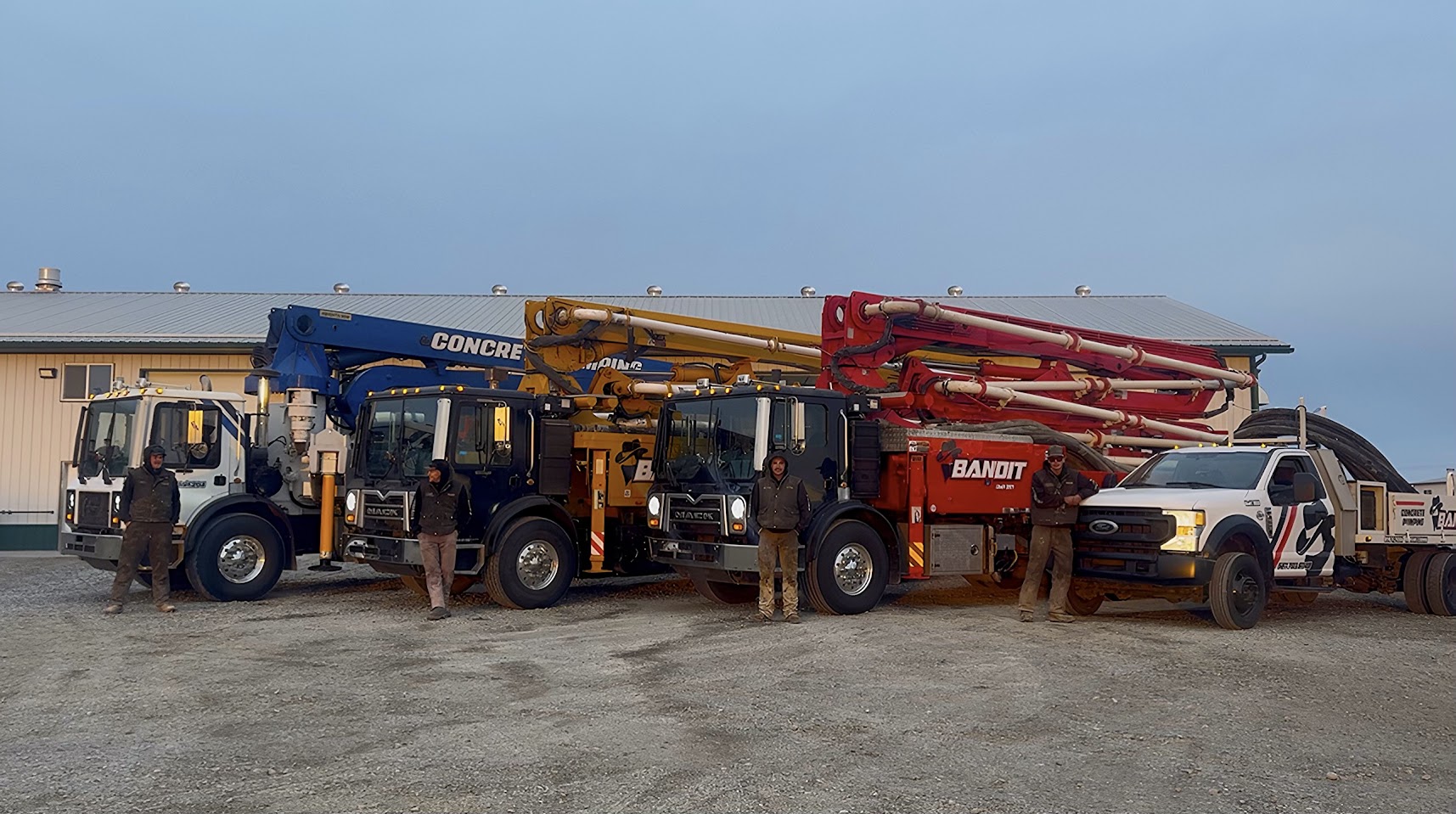
Bandit Concrete Pumping serves projects from Calgary to Red Deer with boom pumps and a 4x4 truck-mounted line pump selected for real Alberta jobsite conditions. The focus is straightforward: get set up safely, place concrete accurately, keep the crew moving, and leave the work area as clean as the job allows.
Weather can still affect any concrete pour. Cold conditions, heat, wind, soft ground, changing site access, and delayed ready-mix trucks all require adjustment. A prepared pump crew cannot control every variable, but experience helps them respond without adding confusion to an already demanding day.
Book the Pump Before the Concrete Is Ordered
The best time to solve a placement problem is before the ready-mix schedule is set. Share the job details early, confirm the right pump configuration, and make sure truck access, setup space, and the placement plan all work together. When the concrete arrives, the crew should be ready to place it - not figuring out how to reach the forms.